Tree Removal Services for Overgrown Trees Threatening Foundations
A mature tree can make a property feel settled, valuable, and shaded in all the right ways. It can also become a serious structural problem when roots push toward footings, trunks lean over load-bearing walls, or dense canopies trap moisture against a roofline and slab edge. Homeowners often notice the beauty first and the damage later. By the time interior doors start sticking, hairline cracks widen across brick veneer, or a patio begins to lift, the tree has usually been interacting with the foundation for years.
That is where experienced Tree Removal Services matter. The work is not just about cutting down a tree. It is about understanding species behavior, soil movement, root architecture, drainage patterns, wind exposure, and the order in which the problem should be addressed. In some cases, removal is the only sensible answer. In others, a skilled crew can reduce risk with Tree Pruning & Crown Shaping, Tree Cable and Bracing, or a phased management plan recommended through a Certified Arborist Consultation. The right decision depends on the tree, the structure, and the site.
When a tree becomes a foundation threat
Not every large tree near a house is a danger. I have seen healthy oaks stand twenty or thirty feet from a slab for decades without causing meaningful structural movement. I have also seen younger, fast-growing species create major trouble in less than ten years because they were planted in the wrong place, in reactive clay soil, next to shallow footings.
The issue usually comes down to three interacting forces.
First, roots seek water and oxygen. Contrary to popular belief, roots do not typically smash through concrete foundations like a movie monster. What they do instead is far more common and, in many cases, more damaging. They exploit weak points, grow into existing gaps, dry out moisture-sensitive soils, lift hardscapes, and alter the support conditions around a structure. On expansive clay sites, a large tree can pull enough moisture from one side of a foundation to contribute to differential settlement. On the other end of the spectrum, poor drainage around roots can keep soils too wet, softening support and stressing slab edges.
Second, canopy size affects the microclimate around a house. A dense overgrown crown can keep portions of a roof and walls damp for longer after storms. That does not usually crack a footing by itself, but it can accelerate fascia rot, encourage moss, clog gutters, and complicate drainage. On older homes with marginal waterproofing, this matters more than many owners expect.
Third, the sheer mass of a mature tree creates hazard loading. If the trunk is leaning toward the house, if codominant stems are splitting, or if decay is advanced at the root flare, the problem is no longer limited to slow structural movement. It becomes a life-safety issue that may require Dangerous Tree Assessment and Removal or even Emergency Tree Services after high winds.
The warning signs property owners should not ignore
The earliest signs often appear in the house before they appear in the tree. People call a tree company because they see cracks in drywall, but the conversation quickly shifts outdoors. During site visits, certain patterns come up again and again.
- New or widening cracks in foundation walls, brick veneer, interior drywall, or floor tile, especially on the side nearest a mature tree
- Patio slabs, walkways, driveways, or retaining walls lifting or tilting near the trunk
- Doors and windows that suddenly bind, particularly after hot dry periods or after extended rain
- Large surface roots running toward the house, exposed root flare issues, or signs of root girdling and soil heaving
- A visible lean, dead upper limbs, trunk cavities, fungal growth at the base, or soil cracking around anchoring roots
Any one of these signs deserves attention. Several together mean the site should be assessed promptly. That does not automatically mean removal, but it does mean guessing is no longer a good strategy.
Why diagnosis should come before removal
Homeowners are often tempted to jump straight to cutting the tree down, especially if a contractor or neighbor says, “That root system is ruining your foundation.” Sometimes that instinct is right. Sometimes it leads to an expensive mistake.
A sound diagnosis looks at both the tree and the building. If the home sits on highly expansive soil, abrupt removal of a large water-demanding tree can change moisture conditions enough to trigger heave in the months or years that follow. That is not a reason to leave a dangerous tree standing, but it is a reason to plan the work carefully and involve the right professionals. On some sites, irrigation adjustment, drainage correction, and monitoring are part of the safest path after removal.
This is where a Certified Arborist Consultation earns its keep. A qualified arborist can identify species, estimate likely root spread, inspect structural defects, and determine whether the tree is the main problem, a contributing factor, or simply being blamed for pre-existing structural issues. On higher-risk cases, that arborist may coordinate with a foundation specialist or structural engineer. Good companies do not act offended when another expert is brought in. They welcome clear data because it protects the homeowner and the crew.
I remember one property where a homeowner was convinced a large ash tree had caused a corner of the garage to drop. The tree was close enough to be suspicious, but the real culprit turned out to be a broken drainage line that had washed out soil under the slab. The ash still needed Tree Pruning & Crown Shaping to clear the roof and remove deadwood, but full removal would not have solved the settlement problem. That kind of distinction matters.
Cases where removal is the most responsible choice
There are situations where the decision is straightforward. If the tree is structurally compromised and within striking distance of the home, removal moves to the top of the list. If roots are aggressively lifting hardscape and causing repeated trip hazards near the foundation, and the species is known for poor placement performance in tight residential lots, replacement may be smarter than repeated repair. If the trunk is already too close to footings for long-term coexistence, there is often no elegant workaround.
The strongest candidates for removal usually share several of the following traits: a species with high water demand or invasive root behavior for the site, poor health, significant decay, limited space, and a target-rich area that includes the house, fence, utilities, and neighboring structures. When those factors stack up, Dangerous Tree Assessment and Removal is not alarmist language. It is accurate language.
Emergency Tree Services come into play when the timetable collapses. After storms, a tree that was marginal on Friday can be resting on a roof by Saturday. Split unions, root plate uplift, and suspended limbs over a bedroom do not allow for leisurely decision-making. A seasoned emergency crew stabilizes the immediate risk first, then completes controlled dismantling with rigging, cranes, or sectional removal as needed.
When preservation still makes sense
Good arborists do not treat every overgrown tree as a candidate for the saw. Preservation can be the better answer when the tree is healthy, the structural threat is manageable, and the site offers enough room for correction.
Selective Tree Pruning & Crown Shaping can reduce end-weight on extended limbs, improve clearance from rooflines, reduce sail effect in wind, and restore a more balanced canopy. That does not shrink the root system on command, but it can lower the immediate risk of branch failure and improve the tree’s long-term structure.
Tree Cable and Bracing has a place too, particularly for mature specimens with included bark, codominant stems, or vulnerable unions that still retain strong landscape value. It is not a miracle fix and it is not permanent neglect disguised as care. It is a support strategy that works best when paired with pruning, monitoring, and realistic expectations. I have seen cable systems extend the safe service life of important landscape trees for years, but only when the tree was otherwise worth keeping.
The key distinction is this: preservation measures are appropriate for manageable defects, not for severe decay at the base, advanced root failure, or obvious foundation conflict that is already escalating. Keeping a tree at all costs can end up costing far more.
The role of stump and root management after removal
Removing the trunk is only part of the job. The next question is what to do about the stump and the remaining roots. Many homeowners assume all roots should be excavated immediately. In practice, that is often unnecessary, and near a foundation it can even be unwise if done aggressively.
Stump Removal & Grinding is the most common next step because it clears the visible stump, allows regrading, and restores usable surface area. Grinding is generally less disruptive than full stump excavation. Full extraction can disturb surrounding soil, irrigation, utility lines, and hardscape, which matters when the work occurs close to footings or underground services.
As for roots, smaller roots usually decay naturally over time. Large structural roots near a house require a more careful decision. Cutting them blindly can destabilize soil, affect nearby structures, or make future landscaping difficult. On some projects, the best course is to grind the stump, leave major roots in place to decompose gradually, and monitor settlement or heave. On others, targeted root removal is needed because roots are lifting a walk or invading a damaged utility trench. The right answer depends on access, soil type, moisture conditions, and how close the roots run to the structure.
What a professional removal process should look like
A quality tree company does not show up with chainsaws and improvise. The work should begin with a site-specific plan. That plan considers access routes, overhead power lines, fencing, roof protection, crane needs, rigging points, debris handling, and where cut material will land. Foundation-adjacent removals often happen in tight backyards with limited drop zones, so sectional dismantling is common.
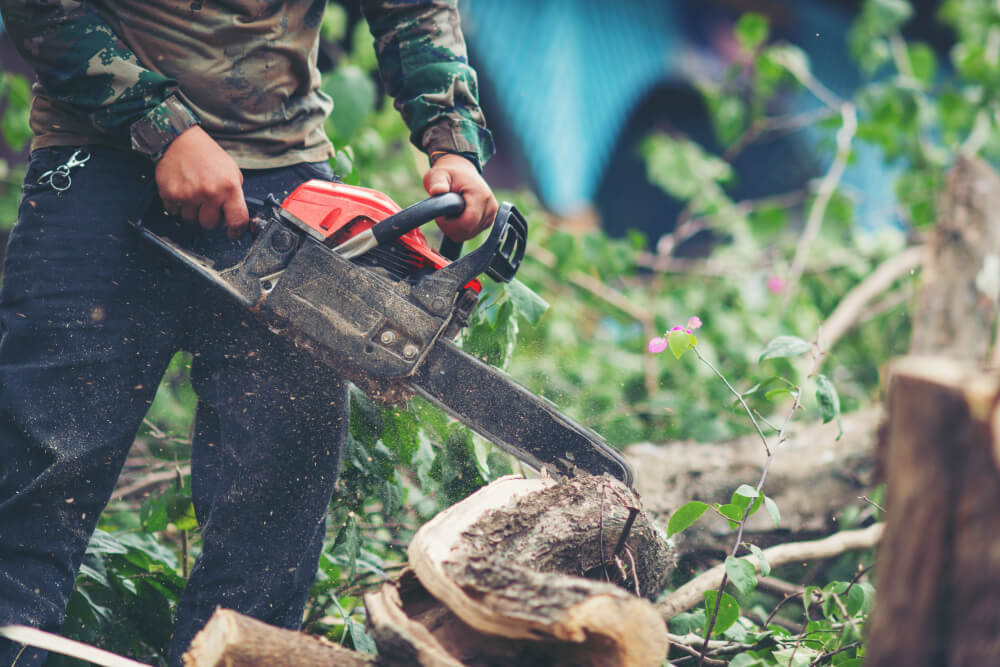
The best crews move methodically. They may first reduce the canopy from the outside in, lowering limbs with ropes to avoid impact on roofs, patios, and planting beds. Then they take down the trunk in manageable sections. On confined sites, even the log wood is rigged and lowered rather than dropped. This is slower than open-yard felling, but it prevents secondary damage, which is where many cheap bids become expensive.
Insurance and crew competence matter here. Removing a forty- or sixty-foot tree near a home is not routine labor. It is technical risk management. If a company cannot clearly explain how it will protect the structure and surrounding landscape, that is useful information.
Questions worth asking before you hire anyone
A short conversation can reveal a lot about whether a company understands foundation-related tree work or simply wants to win the job.
- Will a Certified Arborist Consultation be part of the evaluation, and can they explain why removal is preferred over pruning, bracing, or monitoring
- How will they manage debris, limb lowering, and trunk sectioning to avoid impact near the home, fences, utilities, and hardscape
- Is Stump Removal & Grinding included, and what is their recommendation for root management close to the foundation
- Are they insured for this scope of work, and have they handled similar removals in confined residential spaces
- If the tree is storm-damaged or unstable, do they provide Emergency Tree Services and temporary hazard mitigation
Those are practical questions, not gotcha questions. Competent providers answer them plainly.
Cost factors, and why the cheapest bid often misses the real issue
Tree removal pricing varies widely because risk and logistics vary widely. Height matters, but access often matters more. A medium tree in a backyard with no gate access, close to a house and under utility lines, can cost more to remove than a taller tree in an open front yard. Crane use, traffic control, stump grinding, haul-away volume, and emergency response timing all affect price.
There is also a hidden cost category homeowners overlook: what happens after the tree is gone. If the removal changes sun exposure dramatically, understory plants may burn out. If drainage was being slowed by root mounding and leaf buildup, runoff patterns may shift. If a thirsty tree is removed from reactive clay near a slab, soil moisture behavior may change. The right contractor raises Discover more these issues before the cut, not after.
A low bid can be perfectly legitimate, but it can also reflect corners being cut on cleanup, protection, insurance, or root and stump scope. I have met more than one homeowner who thought stump grinding was included, only to discover they had paid for “cut flush” and were left with a broad stump at grade, still surrounded by sprouting roots and inaccessible soil.
Wildfire, drought, and the changing risk picture
In fire-prone regions, overgrown trees near homes present another layer of concern. Wildfire Mitigation Tree Services are not limited to forested acreage. Residential lots benefit too, especially where ladder fuels, deadwood, overhanging limbs, and dense vegetation connect the ground to the eaves.
A foundation-threat tree can also be a wildfire-threat tree. Low branches over mulch beds, heavy bark debris against the house, and crowns encroaching on chimneys or vents all increase exposure. In those settings, removal sometimes solves two problems at once: structural conflict and defensible space. Other times, strategic pruning, thinning, and cleanup do enough to lower fire intensity around the structure while preserving healthy trees that provide shade and soil stability.
Drought changes behavior as well. Trees under water stress often become more brittle, more pest-prone, and less predictable in storms. Foundation soils also react differently during long dry spells. A tree that seemed harmless in average years may start driving larger moisture swings during extremes. That is one reason older assumptions about “this tree has always been fine” can fail under present conditions.
Replanting after a removal, without repeating the problem
Taking out a problem tree should improve a property, not leave it bare and vulnerable. Replanting is often part of the long-term plan, but species choice and placement need more discipline than the original landscape may have had.
A better replacement strategy considers mature size, root behavior, soil compatibility, and clearance from the home. Small to medium ornamental trees often make more sense near foundations than large canopy species. The exact setback depends on species and site conditions, but the guiding principle is simple: plant for mature dimensions, not nursery size. A tree that looks charming in a fifteen-gallon container can become an argument with your slab fifteen years later.
The other part of replanting is maintenance. Young trees benefit from early structural pruning. Proper Tree Pruning & Crown Shaping in the first years can prevent codominant leaders, poor branch attachments, and canopy imbalance that become expensive later. It is one of the few parts of tree care where modest early effort pays outsized dividends.
A measured response protects both the house and the landscape
Overgrown trees threatening foundations put homeowners in a difficult spot because the stakes are mixed. There is money tied up in the house, memory tied up in the landscape, and safety tied up in the decision. The right response is neither panic nor denial. It is careful evaluation followed by decisive action.
Sometimes that action is full Tree Removal Services, paired with Stump Removal & Grinding and a thoughtful plan for soil and drainage afterward. Sometimes it is preservation through Tree Tree Pruning & Crown Shaping Pruning & Crown Shaping, Tree Cable and Bracing, and periodic review. When failure risk is immediate, Emergency Tree Services and Dangerous Tree Assessment and Removal become essential. When the broader site is exposed to fire risk, Wildfire Mitigation Tree Services should shape the strategy too.
What matters most is choosing a company that understands the difference between a large tree and a tree problem. Those are not always the same thing. The best outcomes come from crews and arborists who know when to save, when to reduce, and when to remove, and who can explain that judgment clearly before the first limb is cut.
Name: Ace Tree Services Ltd.
Address: 4656 Wallace Hill Rd, Kelowna, BC V1W 4C2, Canada
Phone: 250-212-9593
Website: https://acetree.ca/
Email: [email protected]
Hours:
Sunday: Closed
Monday: 7:00 AM–5:00 PM
Tuesday: 7:00 AM–5:00 PM
Wednesday: 7:00 AM–5:00 PM
Thursday: 7:00 AM–5:00 PM
Friday: 7:00 AM–5:00 PM
Saturday: 7:00 AM–5:00 PM
Time zone: Pacific Time
Open-location code / Plus code: RHF8+8G Kelowna, British Columbia, Canada
Map/listing URL: https://www.google.com/maps/search/?api=1&query=Google&query_place_id=ChIJxRVIBx2LfVMRNRSkp6-IC0U
Embed iframe:
Socials:
https://www.facebook.com/p/Ace-Tree-Services-61585901931447/
Ace Tree Services Ltd. provides professional tree care from its Kelowna location on Wallace Hill Road.
The official website lists tree removal, stump removal and grinding, tree pruning and crown shaping, emergency tree services, certified arborist consultation, dangerous tree assessment and removal, tree cabling and bracing, and wildfire mitigation.
Ace Tree Services serves homeowners, businesses, and property owners in Kelowna and throughout the Okanagan Valley.
The company’s official site highlights ISA Certified Arborist support, local Okanagan experience, and fully insured tree service work.
Customers can contact Ace Tree Services for planned tree maintenance, high-risk removals, storm-related tree concerns, pruning, stump grinding, and arborist consultation needs.
The supplied public listing address is 4656 Wallace Hill Rd, Kelowna, BC V1W 4C2, near rural and residential service areas in southeast Kelowna.
For tree services in Kelowna and the Okanagan, call 250-212-9593, email [email protected], or visit https://acetree.ca/
The public map listing uses plus code RHF8+8G Kelowna, British Columbia, Canada and can help customers find Ace Tree Services Ltd. near Wallace Hill Road.
Popular Questions About Ace Tree Services Ltd.
What does Ace Tree Services Ltd. do?
Ace Tree Services Ltd. provides tree removal, stump removal and grinding, tree pruning and crown shaping, emergency tree service, certified arborist consultation, dangerous tree assessment and removal, tree cabling and bracing, and wildfire mitigation.
Where is Ace Tree Services Ltd. located?
Ace Tree Services Ltd. is listed at 4656 Wallace Hill Rd, Kelowna, BC V1W 4C2, Canada.
What phone number should customers call?
Customers can call Ace Tree Services Ltd. at 250-212-9593.
What is the email address for Ace Tree Services Ltd.?
The supplied email address is [email protected].
What are Ace Tree Services Ltd.’s hours?
The supplied listing hours show Monday through Saturday from 7:00 AM to 5:00 PM, with Sunday closed, Pacific Time. The official website lists 7:00 AM to 5:00 PM, Monday through Friday, so customers should confirm Saturday availability before booking.
Does Ace Tree Services Ltd. provide emergency tree service?
Yes. The official website lists emergency tree services, including emergency tree removal, dangerous tree assessment, emergency stabilization, and limb or branch cleanup.
Does Ace Tree Services Ltd. offer arborist consultations?
Yes. The official services page lists certified arborist consultation as one of the company’s Okanagan tree services.
Does Ace Tree Services Ltd. provide stump grinding?
Yes. The official services page lists stump removal and grinding as a service.
What areas does Ace Tree Services Ltd. serve?
The official website states that Ace Tree Services serves Kelowna and the Okanagan Valley.
How do I contact Ace Tree Services Ltd.?
Call 250-212-9593, email [email protected], visit https://acetree.ca/, or use the listed social profile: Facebook.
Landmarks Near Kelowna, BC
Wallace Hill Road: The road listed for Ace Tree Services Ltd. and a practical reference point for the company’s Kelowna location.
East Kelowna: A nearby rural and residential area where tree maintenance, pruning, removals, and wildfire mitigation can be important for property owners.
Myra-Bellevue Provincial Park: A major outdoor landmark southeast of Kelowna and a useful reference for the surrounding hillside and forested areas.
Gallagher’s Canyon: A nearby Kelowna community with residential properties, mature trees, and landscape maintenance needs.
Kettle Valley: A southeast Kelowna neighborhood with homes, parks, and landscaped properties.
Mission Creek Greenway: A well-known natural corridor in Kelowna and a local reference point for tree-lined recreation areas.
Orchard Park Shopping Centre: A major Kelowna retail landmark and citywide reference point.
Downtown Kelowna: A central business and residential district within Ace Tree Services’ broader Kelowna service area.
Okanagan Lake: A major regional landmark running through Kelowna and the surrounding Okanagan Valley.
Mission Creek Regional Park: A recognizable Kelowna park and natural landmark with extensive trees and trails.
Rutland: A large Kelowna community with residential and commercial properties that may need tree service support.
Glenmore: A Kelowna neighborhood with homes, parks, and established trees.
Lower Mission: A residential and lake-adjacent Kelowna area where pruning, tree health, and property safety can matter for homeowners.
Kelowna International Airport: A major transportation landmark north of central Kelowna.
West Kelowna: A nearby Okanagan community across the lake and a practical regional service reference.
For tree removal, stump grinding, pruning, crown shaping, emergency tree service, arborist consultation, dangerous tree assessment, cabling and bracing, or wildfire mitigation near these Kelowna and Okanagan landmarks, contact Ace Tree Services Ltd. at 250-212-9593, email [email protected], or visit https://acetree.ca/